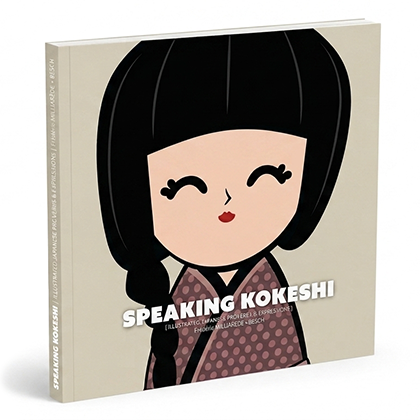
"Speaking Kokeshi" is a cultural project that combines visual elements of Japan 日本,
between kokeshi dolls こけし and proverbs (kotowaza) 諺, idioms, sayings, and lifestyle.
It is a collection of illustrated Japanese proverbs.
The collection started in May 2023.
New Kokeshi are published regularly.
The visuals are individually drawn.
The translation and explanation stem from research conducted to create the illustrations.
Literal: Youth does not come twice.
Meaning: It’s important to create meaningful experiences during youthfulness.
Most cultures have a version of this thought. What makes the Japanese one worth sitting with is what it doesn’t say. There’s no instruction here, no call to seize the day or live boldly. Just a quiet, factual observation: youth comes once, and then it doesn’t come back. The restraint is the point.
The phrase carries the particular flavor of Edo-period (1603-1868) popular wisdom, a tradition less interested in grand philosophical pronouncements than in plain truths passed between people who had work to do.
Its closest spiritual neighbor is the Buddhist concept of 「 mujō 」 (無常 impermanence), the understanding that nothing holds its form, that every condition is temporary and therefore worth attending to while it lasts. But where Buddhist teaching often points toward detachment, this proverb points toward presence. It doesn’t ask you to let go. It asks you to notice what you have before you no longer have it.
In Japan today,it surfaces in the kind of conversation that happens between generations: a parent watching a child hesitate over a choice, an older colleague talking to someone early in their career.
It carries no urgency in the Western sense, no pressure to fill every moment. The implication is quieter than that. Something is available to you now that won’t be available later, and it would be a shame to miss it by not paying attention.
That distinction matters for Western readers. The European and American tradition around youth tends toward the dramatic: carpe diem, YOLO, the fear of regret as a motivator. This proverb operates differently. It doesn’t threaten. It observes. Youth doesn’t come twice is simply a true thing, said plainly, and the response it invites is less about doing more than about being present to what’s already there.
Note. Asanoha pattern: mainly used on kimonos for young children in the hope it would support them to grow to be strong.
Speaking Kokeshi#008 — You only have one youth. — 若い時は二度来ない
Speaking Kokeshi started in May 2023 from a simple observation: Japan has one of the richest traditions of proverbial expression in the world, and most of it is either unknown outside the country or reduced to a handful of pop concepts stripped of their context.
The original idea was to adapt the tradition of 19th-century European talking plates to modern times — objects that carried a phrase, a face, a moral. The kokeshi doll was the right vehicle. Spare, distinctive, rooted in Japanese craft, it allows the illustration to carry meaning without excess.
Forty proverbs. Forty characters. Each drawn individually, each the result of research into the cultural and historical origins of the expression. Not a catalog. A book with a point of view.