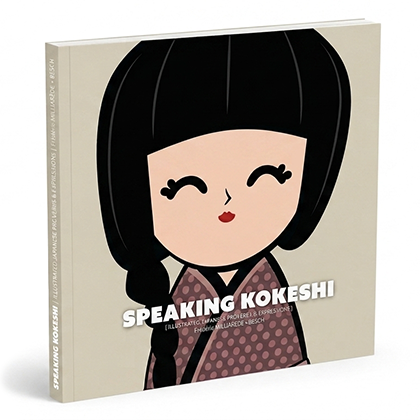
"Speaking Kokeshi" is a cultural project that combines visual elements of Japan 日本,
between kokeshi dolls こけし and proverbs (kotowaza) 諺, idioms, sayings, and lifestyle.
It is a collection of illustrated Japanese proverbs.
The collection started in May 2023.
New Kokeshi are published regularly.
The visuals are individually drawn.
The translation and explanation stem from research conducted to create the illustrations.
Literal: A walking stick before stumbling.
Meaning: Take proactive measures to prevent problems.
The image is simple, almost modest: a walking stick, held in hand before the first stumble. Not after. Before. That single detail is everything.
Western ideas of precaution tend to be reactive. “ An ounce of prevention is worth a pound of cure ” implies a risk already spotted. “ Forewarned is forearmed ” assumes a warning has come in. This proverb asks something quieter: carry the stick before you have any reason to. The threat is hypothetical. The stick is real.
That posture runs deep in Japanese thinking. Historians generally place this kotowaza within the practical wisdom that flourished during the Edo period (1603-1868), when urban merchant culture developed what might be called a philosophy of anticipation. Not samurai stoicism, not Zen detachment, but the grounded intelligence of people who understood that the world rarely announces its difficulties in advance. Success in trade meant reading conditions before they shifted. The walking stick belongs to that tradition.
In contemporary Japan, the phrase is everywhere. Disaster preparedness campaigns reach for it regularly, seismic risk is not abstract here, and the 「 bōsai 」 (防災 disaster prevention) culture that deepened after the 1995 Kobe earthquake has given the proverb a renewed, almost literal weight. Local governments use it in public communications. It shows up in financial planning, parenting guides, and fall-prevention programs for an aging population, contexts where the walking stick has perhaps never felt more concrete.
What it carries that Western equivalents don’t is a certain calm. The stick isn’t held in fear. It’s carried as a matter of course, the way you dress for rain without particularly dreading it. That quiet, habitual readiness is as much a cultural disposition as a piece of advice.
Note: Kōjitsunagi pattern. Repetitive use of the kō character. The characters interlock in a way that appears to stretch to infinity. It brings good fortune.
Speaking Kokeshi started in May 2023 from a simple observation: Japan has one of the richest traditions of proverbial expression in the world, and most of it is either unknown outside the country or reduced to a handful of pop concepts stripped of their context.
The original idea was to adapt the tradition of 19th-century European talking plates to modern times — objects that carried a phrase, a face, a moral. The kokeshi doll was the right vehicle. Spare, distinctive, rooted in Japanese craft, it allows the illustration to carry meaning without excess.
Forty proverbs. Forty characters. Each drawn individually, each the result of research into the cultural and historical origins of the expression. Not a catalog. A book with a point of view.